

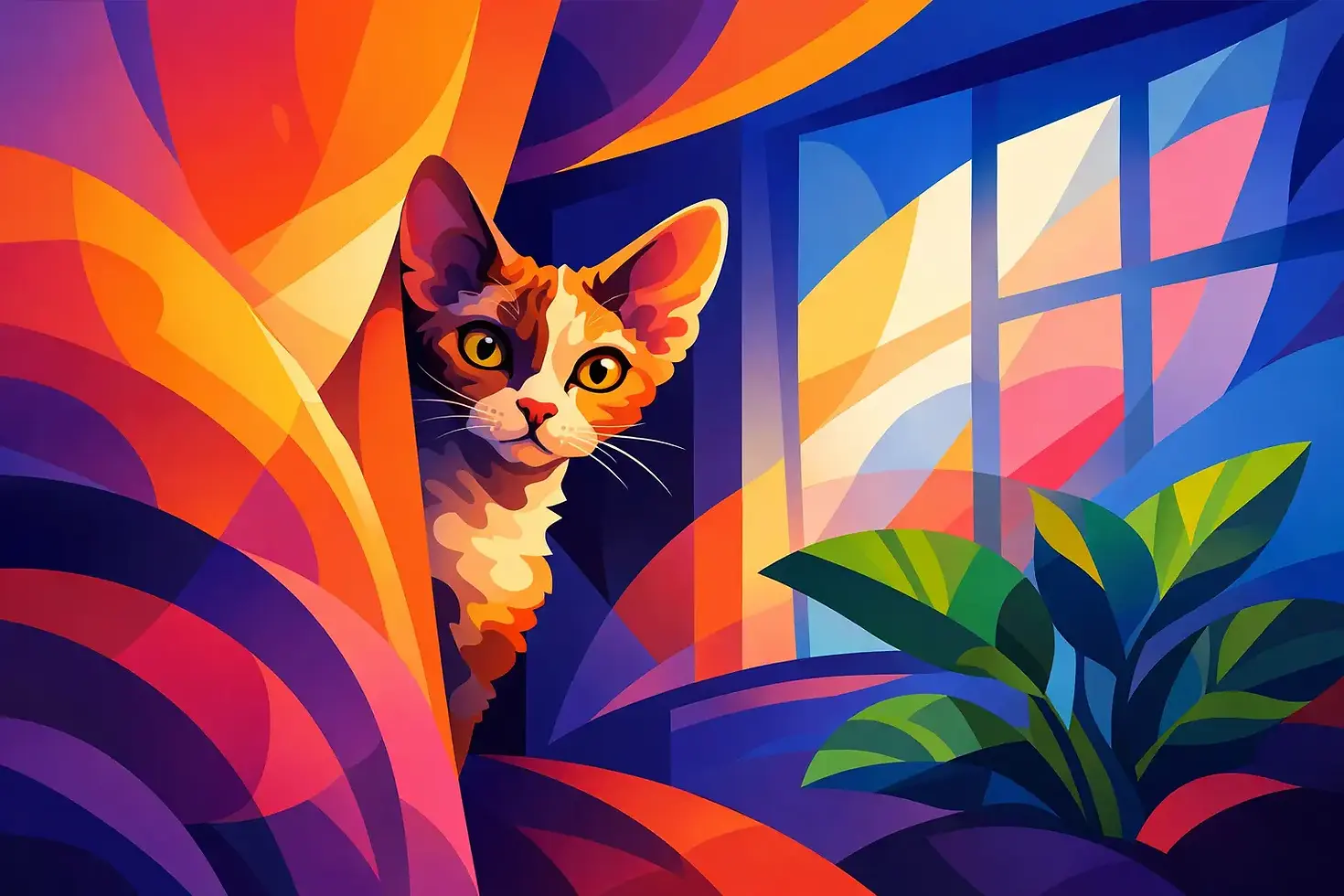
Is a Devon Rex Indoor Cat the Right Fit?

A cold windowsill, a busy kitchen, a warm lap - this is the kind of daily world where a Devon Rex indoor cat truly shines. These cats are deeply people-oriented, quick to seek out body heat, and happiest when they are part of the rhythm of family life. If you are drawn to the breed’s elfin face, soft wavy coat, and affectionate personality, the indoor question matters because this is not a cat that tends to do best living at a distance from its people.
For most homes, the Devon Rex is best suited to indoor living. That does not mean a quiet or boring life. Quite the opposite. A well-raised Devon Rex wants interaction, climbing space, warmth, and regular engagement. When those needs are met, indoor life supports both the cat’s safety and its emotional well-being.
Why a Devon Rex indoor cat usually does best
The Devon Rex is a distinctive breed, both in appearance and temperament. Its short, soft, often sparse coat offers less protection from weather than a heavier-coated cat would have. Many Devons actively seek warmth, whether that means sunny spots, heated beds, blankets fresh from the dryer, or curling against their favorite person under the covers.
That physical sensitivity is one reason indoor life is such a natural fit. Outdoor exposure can mean cold, wet conditions, rough terrain, parasites, loose dogs, traffic, toxins, and the risk of theft. Purebred cats with unusual looks can attract attention for the wrong reasons. For a breed as social and trusting as the Devon Rex, those risks are not small.
There is also the personality piece. Devons are not usually aloof observers. They are often right in the middle of everything, supervising chores, greeting visitors, and turning ordinary moments into play. A cat with that level of social attachment generally thrives when it has close daily contact with its family. Indoor living makes that bond easier to maintain.
What indoor life should look like for a Devon Rex
Keeping a Devon indoors is not simply about closing the door and calling it safe. A Devon Rex indoor cat needs an environment that supports curiosity, movement, and connection. This breed is athletic, clever, and often delightfully mischievous. If the home feels empty or unstimulating, the cat may invent its own entertainment, and that can include climbing curtains, opening cabinets, or helping itself to your dinner.
A strong indoor setup starts with vertical space. Cat trees, shelves, window perches, and stable furniture arrangements allow a Devon to climb and observe. These cats often like to be high up, but they also want to be where people are, so location matters. A beautiful cat tree in an isolated room may see less use than a simpler perch near the family room or home office.
Play should be part of the daily routine, not an occasional extra. Wand toys, soft balls, puzzle feeders, and short interactive sessions help channel energy in healthy ways. Because Devons are highly people-focused, many do best with frequent engagement rather than a pile of toys left on the floor. They enjoy activity, but they enjoy shared activity even more.
Warmth is another practical detail that owners sometimes underestimate. The breed’s coat can vary, but many Devon Rex cats are more temperature-sensitive than the average house cat. Cozy bedding, draft-free sleeping areas, and a comfortably climate-controlled home go a long way. In cooler seasons, you may find your Devon becoming an expert at locating the warmest seat in the house before you do.
Temperament matters as much as the setting
People often ask whether the Devon Rex is a good indoor cat, and the answer is usually yes, but the better question is whether the home is prepared for the breed’s style of companionship. Devons tend to be affectionate, playful, intelligent, and involved. They do not always want to sit quietly across the room looking decorative. They want to participate.
That can be wonderful for families, couples, and individuals who want a true companion animal. A Devon may follow you from room to room, perch on your shoulder, help with your keyboard, and curl up close at bedtime. Many owners love that constant presence. Others find it surprising if they expected a more independent cat.
This is where early socialization and thoughtful breeding matter. Kittens raised in the heart of the home, handled with care, and exposed to normal household life often transition more smoothly into indoor family living. At Crescent Moon Cats, that home-raised approach is part of how we support the breed’s naturally social temperament while honoring health and breed standards.
Health and safety benefits of indoor living
Indoor cats are not free from health concerns, but they are generally better protected from many avoidable dangers. For a Devon Rex, that protection can be especially valuable. A safer indoor environment reduces exposure to infectious disease, injury, predators, and environmental hazards. It also makes it easier for owners to monitor appetite, litter box habits, skin condition, and energy level.
Because the Devon Rex has a unique coat and fine skin, regular observation is helpful. Some cats may need routine ear cleaning because the breed can produce more ear wax than some owners expect. Some may also need occasional bathing or gentle skin care, depending on coat type and oiliness. These are not difficult tasks when approached consistently, but they are easier to manage in an indoor cat whose daily condition is closely noticed.
Indoor life also supports better nutrition control and weight management. Devons can be active and energetic, yet every cat is an individual. When meals, exercise, and veterinary care are consistent, owners can make adjustments early instead of reacting after a problem develops.
Can a Devon Rex ever enjoy the outdoors?
It depends on what you mean by outdoors. Free roaming is not the ideal choice for this breed. The risks are simply too high, and the potential benefits do not outweigh them for most homes.
That said, some Devon Rex cats enjoy safe, supervised outdoor access. A secure catio, an enclosed patio, or carefully introduced harness time can provide fresh air and novelty without the dangers of roaming. Not every Devon will enjoy a harness, and not every catio setup works for every household. The goal is not to force an outdoor experience, but to offer enrichment in a controlled way if the cat responds well to it.
If you do try supervised outdoor time, move slowly. A confident, social cat can still be startled by wind, noise, or unfamiliar movement. Indoor confidence does not always translate to outdoor confidence.
Is a Devon Rex indoor cat good for families?
In many cases, yes. The breed often fits beautifully into engaged households where people want a cat that interacts, plays, and bonds closely. Devons can do well with respectful children, cat-friendly dogs, and other pets when introductions are handled properly. Their playful, people-loving nature is a big part of their appeal.
The trade-off is that they are not a low-involvement breed. If your home is empty for very long stretches every day, or if you want a cat that asks very little of you emotionally, a Devon may not be the best match. They tend to flourish where companionship is part of the package.
This is why responsible placement matters. A good breeder is not simply producing kittens. A good breeder is helping match temperament, household style, and long-term expectations. That stewardship protects both the cats and the families who welcome them.
The real question is lifestyle
A Devon Rex indoor cat is not just an indoor version of any cat. This is a breed with a particular blend of warmth-seeking behavior, intelligence, athleticism, and social intensity. Indoor living suits that blend very well when the home offers safety, enrichment, and genuine connection.
If you want a cat that will share your space in a very personal way, make you laugh daily, and settle into the center of home life, the Devon Rex has a great deal to offer. Give this breed warmth, play, careful health oversight, and plenty of togetherness, and you are not just keeping a cat indoors. You are building the kind of home where a Devon Rex can truly belong.


Comments